
[ The Work Behind The Fund ]Interests Over Operation.
Trellis does not drill wells. We do not operate fields or manage day-to-day production.
Instead, we identify the best wells being drilled by the best operators in the country, acquire a working interest in those wells at a discount, and participate proportionally in the revenue they generate.
This is the non-operated model. It gives Trellis, and our investors, exposure to high-quality assets without the overhead, liability, and capital constraints that come with operating them. Companies spend between $60 billion and $80 billion in capital expenditures each year in the US. Operators control millions of acres and cannot allocate budget to every asset they own. Alongside them, Trellis acquires those interests and participates in wells that they've already committed to drilling.
The result is a portfolio built on operator conviction, not speculation.


Operators. Minority Owners. Trellis.
Trellis acquires working interests of anywhere from 1% to 20% in these development wells. Those interests come primarily from third parties, minority owners who hold a stake in a drilling unit but lack the capital or budget to participate when an operator proposes a new program.
When an operator proposes drilling a group of wells in a unit, every working interest owner in that unit receives an election. Many cannot or choose not to participate. Trellis steps in, acquires those interests at a discount, and funds its proportionate share of drilling and completion costs. As the wells produce, cash flows are recycled into additional acquisitions during the investment period, then distributed to investors as the portfolio matures, with a full exit targeted through asset sales.
Trellis will never acquire an asset with a projected loss at current strip pricing. Every deal is underwritten on what the market is doing today, not on an assumption that prices will recover.
Diversified By Design
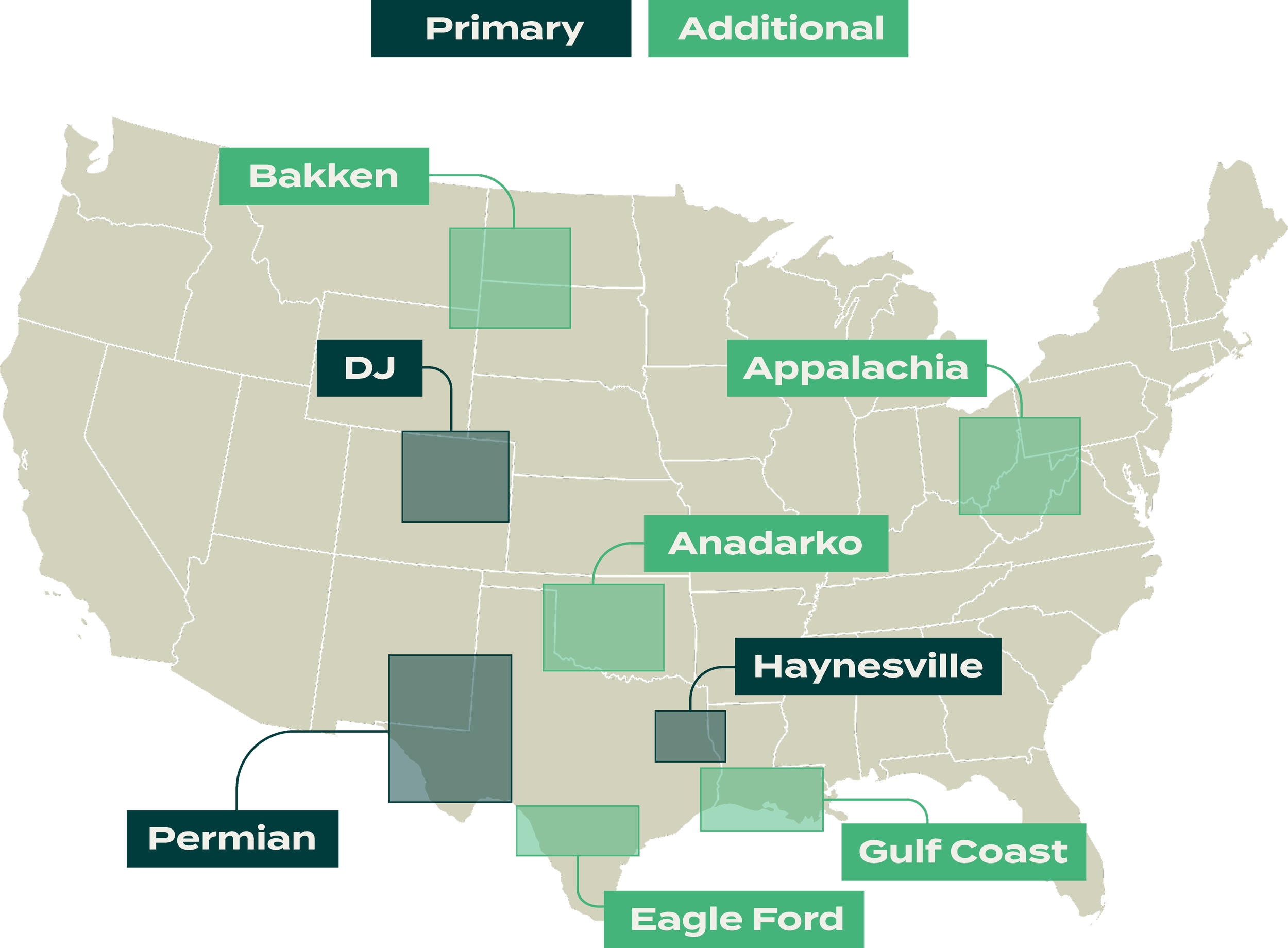
Trellis maintains active experience across most major U.S. onshore basins. Current fund activity is concentrated in the DJ, Permian, Eagle Ford, PRB, and Haynesville basins, with the team pursuing opportunities across the broader Lower 48 as deal flow and operator quality warrant. This secondary focus includes Bakken, the Gulf Coast, Appalachia, and Anadarko.
Diversification across basins, operators, and product mix is not incidental to the strategy. Rather, it is the strategy. No single basin, operator, or commodity drives the portfolio. That discipline is how the team manages concentration risk across a fund's investment period.
Digging into the Opportunities
Every acquisition starts with the same questions.
Is the operator top tier and properly funded?
Is the area well known and repeatable?
Is the well program already committed?
Does the asset perform at today's strip without relying on price appreciation?
Can we acquire the interest at a discount to its underlying value?
Jake has been answering those questions since 2009. The process is not complicated. The experience to execute it consistently is what is hard to replicate.
Finding the Returns
Development wells, the primary focus of our current funds, are future wells being proposed by an operator. These are also known as AFEs and are where the tax benefits are highest. Trellis can acquire these interests before first production.
Development
Production
Existing producing wells, also referred to as PDP, are acquired selectively when pricing and asset quality meet Trellis underwriting standards.

Private ownership of oil and gas resources not subject to drilling and completion costs are pursued opportunistically as a complement to the working interest portfolio.
Minerals

Leasing
Used selectively in specific basin situations, lease agreements are entered into with mineral owners. The agreements allow operators to develop acreage by paying a royalty while also bearing the costs of development.
*Past performance is not a guarantee of future results. Investing in oil and gas is highly speculative. Investors may lose all or part of their investment.